
This opinion piece was originally published in The European Correspondent.
At the European Chips Diversity Alliance (ECDA), we are committed to strengthening Europe’s semiconductor ecosystem by advancing diversity, equity, and inclusion across the sector. As Europe works to secure its technological sovereignty and global competitiveness, it is becoming increasingly clear that addressing the talent gap is not only a workforce challenge but a strategic imperative.
Europe’s semiconductor ambitions depend on unlocking its full talent potential. New ECDA research shows that diversity, equity, and inclusion (DEI) is not just a moral extra – it is central to staying competitive.
Europe’s semiconductor sector stands at a critical junction. According to a recent study from the European Chips Skills Academy, the continent faces a 75,000-talent gap by 2030 – a target required if the goals set out in the European Chips Act are to be met. The Act aims to boost Europe’s manufacturing capacity and sovereignty, yet the sector risks faltering if it overlooks its most essential resource: people.
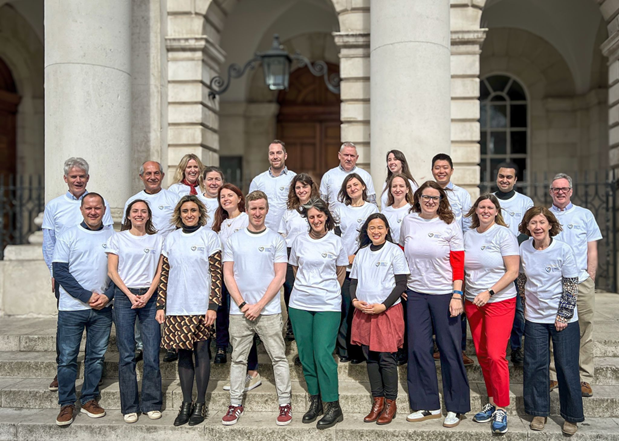
That’s where the European Chips Diversity Alliance comes in. ECDA is a collective of 11 partners from across Europe with one goal in mind: to make the semiconductor sector as inclusive as possible.
ECDA’s latest DEI Report, published in September 2025, found that while nearly half of organisations in the sector rate their innovation performance above expectations, only one in five say the same about their talent pipeline. In other words: the ideas are flowing, but the people pipeline is drying up. That should be alarming for anyone serious about Europe’s technological future.
The research also makes one thing clear: inclusion and efficiency are not opposites. Evidence shows that diverse teams make better, faster decisions. The challenge is that inclusion too often remains in slogans – not embedded in how people are hired, managed, or promoted.
Turning talk of DEI into practical change remains an ongoing challenge across Europe. ECDA addresses this through initiatives such as piloting training programmes on inclusive leadership, developing practical tools for companies, and creating a European ‘MentorChip’ exchange. Because no one ends up somewhere entirely by accident – they’ve had a nudge, a mentor, or a quiet word of encouragement.
In our focus groups, young professionals didn’t talk much about belonging to a group, but rather about fairness, clarity, and respect. They want open hiring processes, managers who notice when language gets in the way, and leaders who see inclusion as a skill and not a sentiment.
There is also a visibility problem. Semiconductors are essential to modern life, yet few people outside the industry can name a single European chip company. That makes it harder to attract diverse talent. If we want underrepresented groups to consider this field, we have to make it visible, relatable, and worth belonging to.
Europe’s struggle with inclusion is as much about culture as structure. Too often, efficiency becomes a code word for avoiding change. But inclusion is what helps organisations learn, adapt, and avoid the blind spots that come from everyone thinking alike.
In practical terms, that means embedding inclusion into how success is measured and rewarded. Any company that leaves DEI to volunteers is effectively betting its future on whoever has time after work. Governments that invest billions in technology but not in people are missing the point entirely.
The pace of change remains slow compared to the urgency of Europe’s talent needs. You can legislate for fabs, but not for belonging. Until inclusion is seen as a professional capability rather than a moral stance, we will continue to fall short.
The chips we produce will shape everything from washing machines to national security. They will define Europe’s technological independence for decades. But independence without inclusion is simply weakness in disguise.
If Europe’s chip ambitions are to maintain momentum, we will need a workforce that feels part of the story. The vision has never been the issue and it is having the conviction to follow through.
ECDA’s full DEI Report is now available. Explore a snapshot of where Europe’s semiconductor sector stands today — and what it will take to build a more inclusive tomorrow.
This article was originally published in The European Correspondent and is republished here as part of ECDA’s commitment to advancing dialogue on diversity, equity, and inclusion in the semiconductor industry.

 Co-funded by