
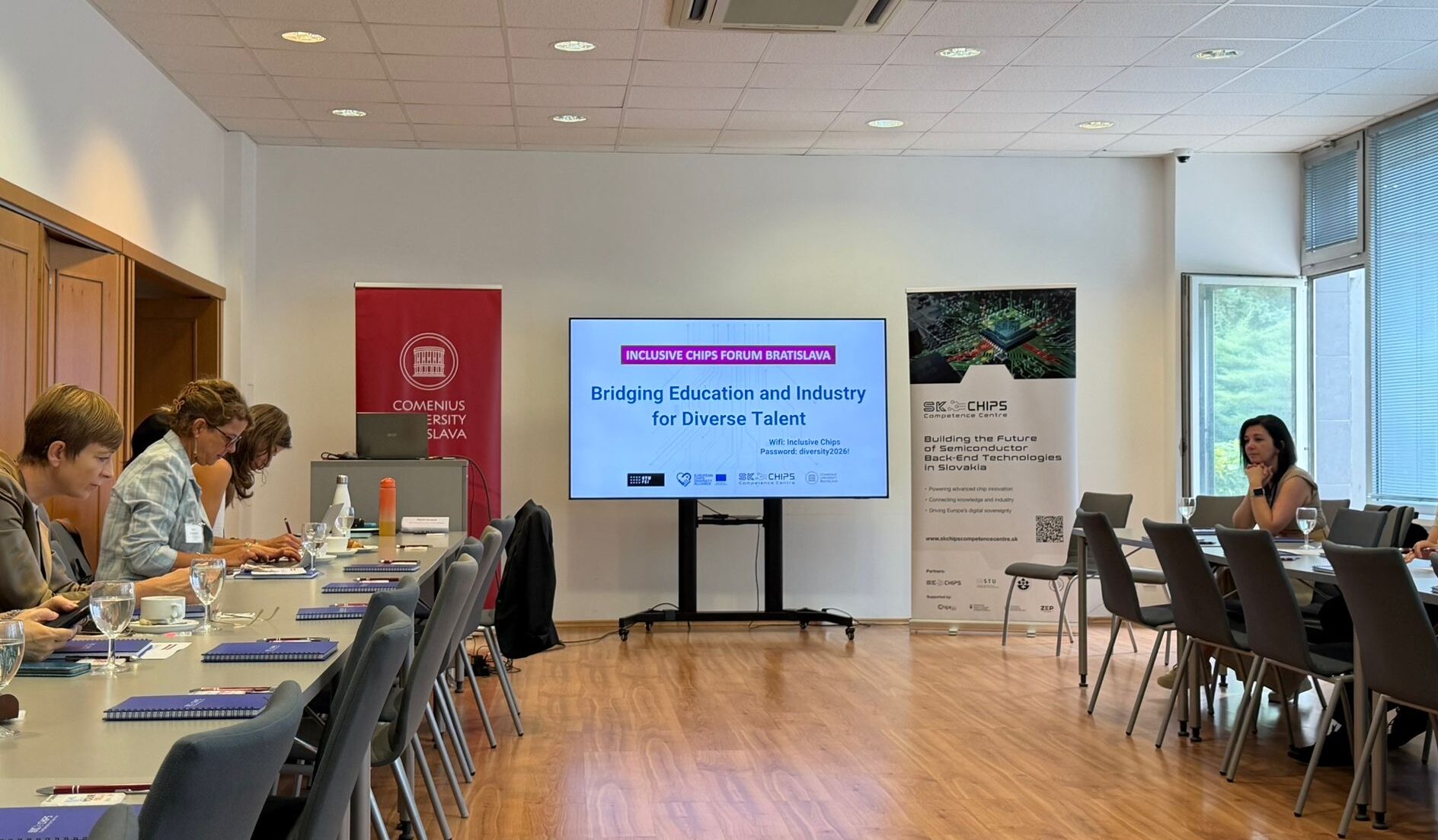
The European Chips Diversity Alliance marked another important milestone this September with two back-to-back events in Bratislava, bringing together educators, industry representatives, policymakers, and researchers to explore how diversity, equity, and inclusion can strengthen Europe’s semiconductor talent pipeline.
Inclusive Chips Forum Bratislava: Bridging Education and Industry for Diverse Talent
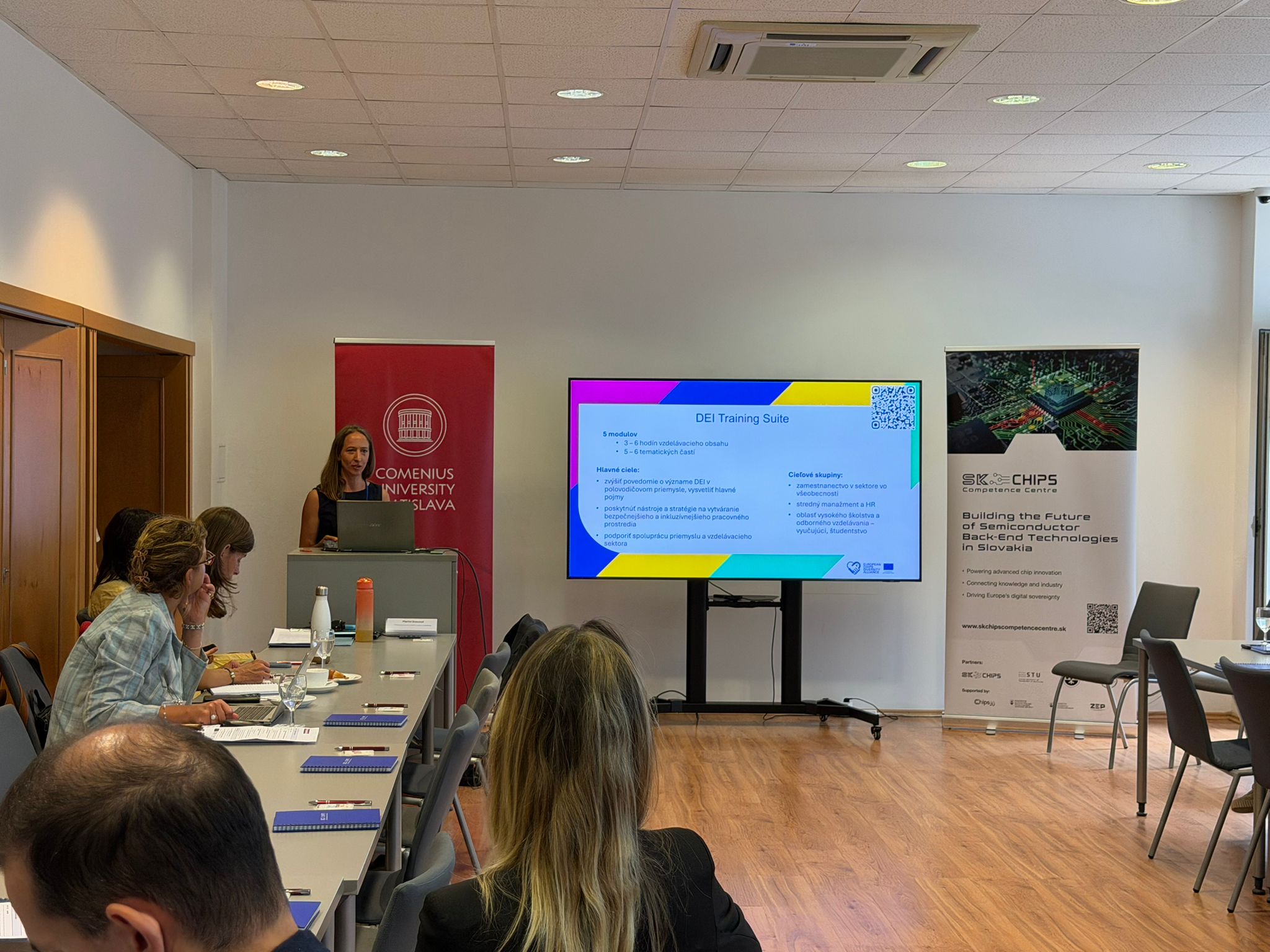
The Inclusive Chips Forum Bratislava took place on September 2 at the Faculty of Electrical Engineering and Information Technology of the Slovak University of Technology in Bratislava, co-organised with the Slovak Chips Competence Centre and Comenius University in Bratislava. The forum focused on a question central to ECDA’s mission: how cooperation between academic institutions and employers can open the semiconductor sector to talent that is too often overlooked.
The day opened with an overview of the ECDA project and its online learning resources, delivered by Andrea Fábiková and Janka Kottulová from Comenius University in Bratislava, who also coordinated the event and its programme.
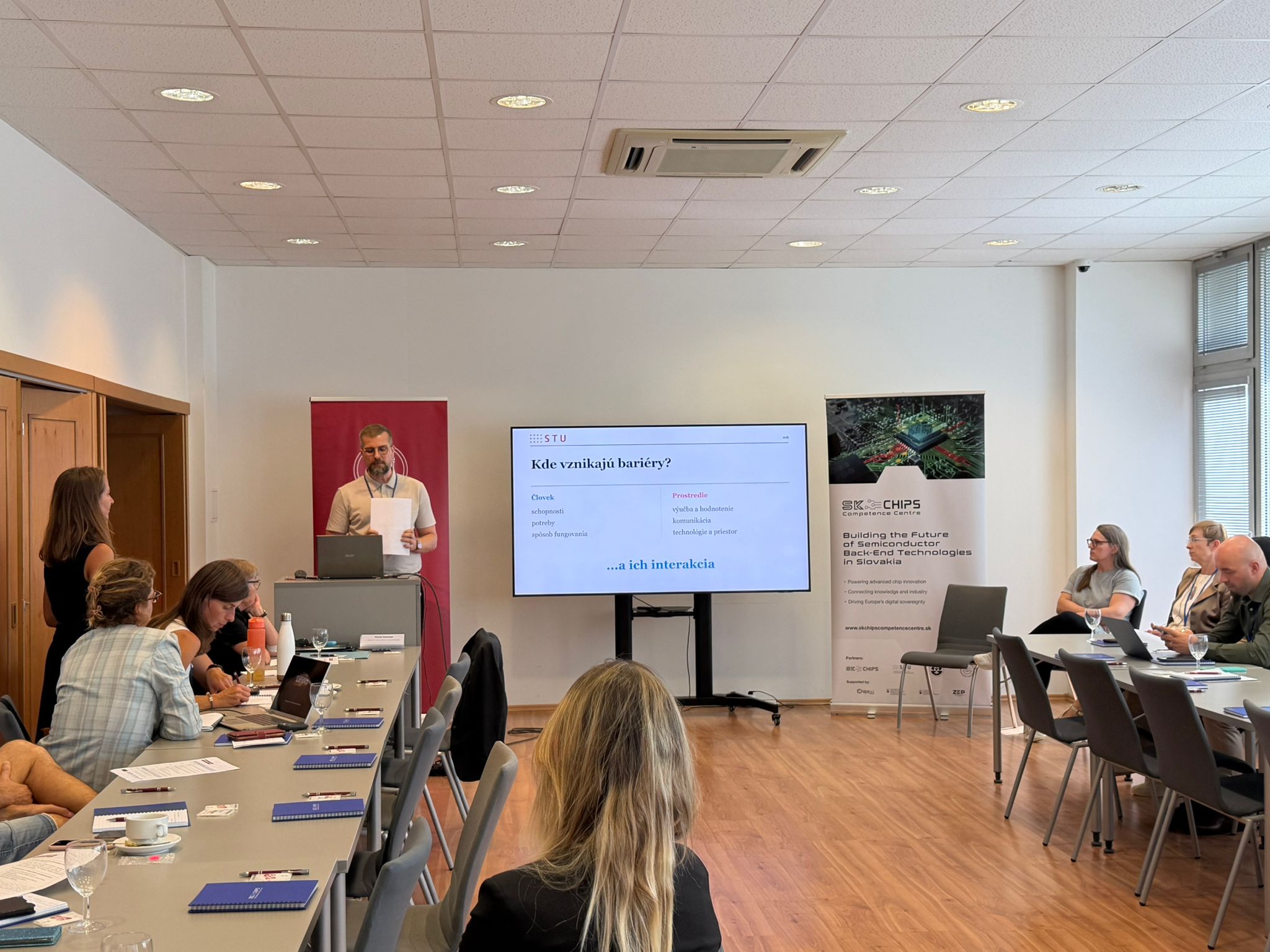
A rich series of presentations followed under the theme Diversity and Inclusion in Practice: Examples of Initiatives from Academia and Industry. Dominik Župan from Graz University of Technology shared how TU Graz is embedding inclusion into curriculum design and university culture. His team’s work was recognised with the TU Graz Mind the Gap Diversity Award in 2022. Catherine MacGillivray-Prantl, Global Head of Talent Management & Culture at Comet and contributor to the ECDA DEI Training Suite, presented how inclusion is woven into Comet’s organisational practices, from bias awareness in recruitment to inclusive leadership. Veronika Pizano introduced the work of Aj Ty v IT, a Slovak non-profit supporting girls and women in technology from elementary school through to adulthood. Ľuboš Tibenský from the STU Counselling Center presented findings from a survey on inclusion at STU, making the case that barriers to participation are a systemic responsibility, not a student failing. And Mária Zuzová from the Secondary Technical School of Electrical Engineering in Košice shared a striking data point: where 183 out of 770 students were female in 1967, today only 25 out of 844 are. She outlined her school’s practical response, from building a sense of belonging to hands-on technical projects and role model exposure.
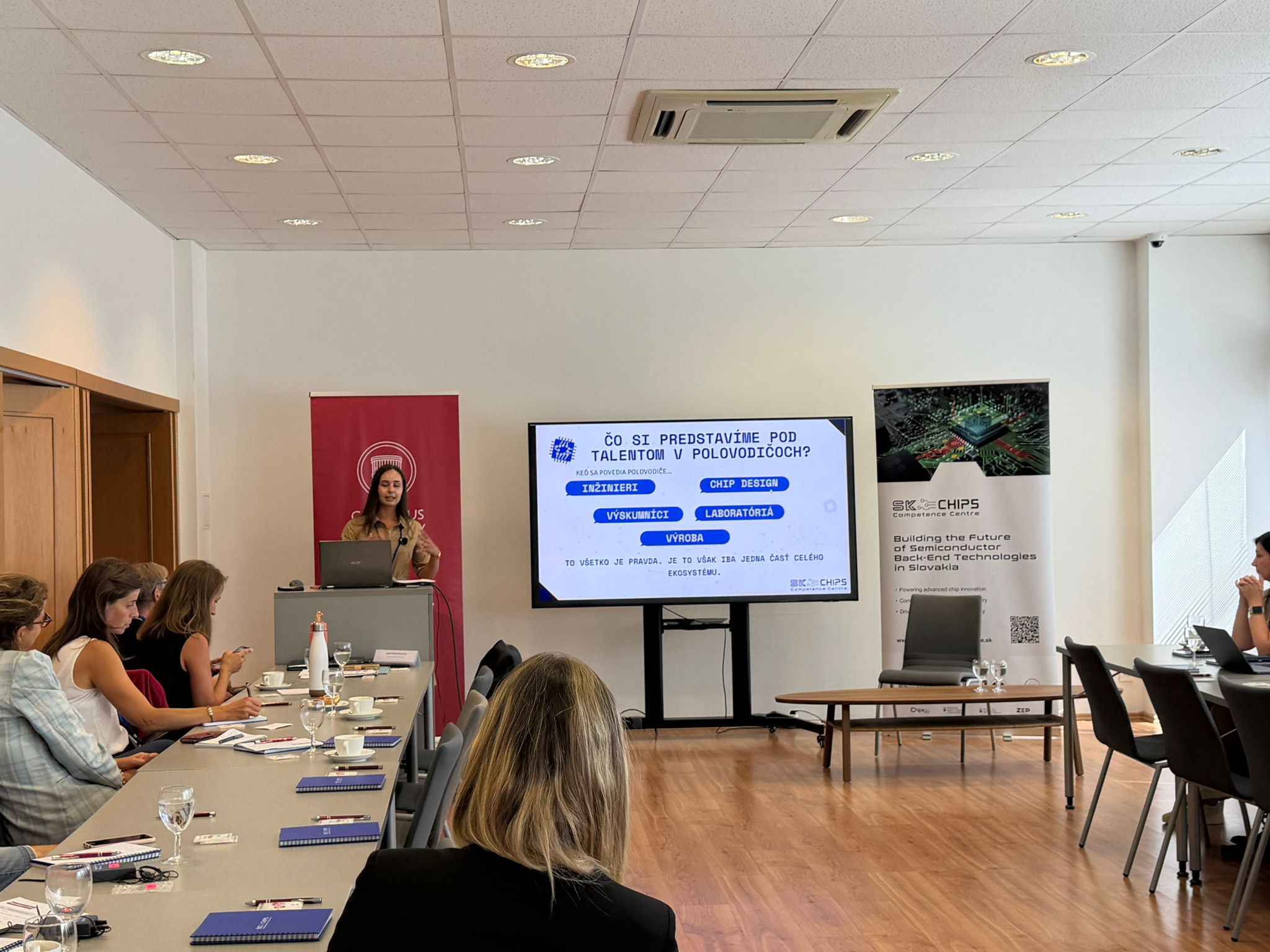
The afternoon opened with an introduction to the Slovak Chips Competence Centre by Vanda Hudáková, followed by a presentation from Viktória Vöröšová on Talent Beyond Engineering: Diverse Pathways into the Semiconductor Industry, highlighting the value of visibility and the often-overlooked roles that the semiconductor sector depends on beyond engineering. Kartikey Srivastava, EU Projects Manager at SEMI Europe and ECDA coordinator, then presented results from two ECDA employer surveys on priorities and challenges around diversity and inclusion and long-term talent retention.
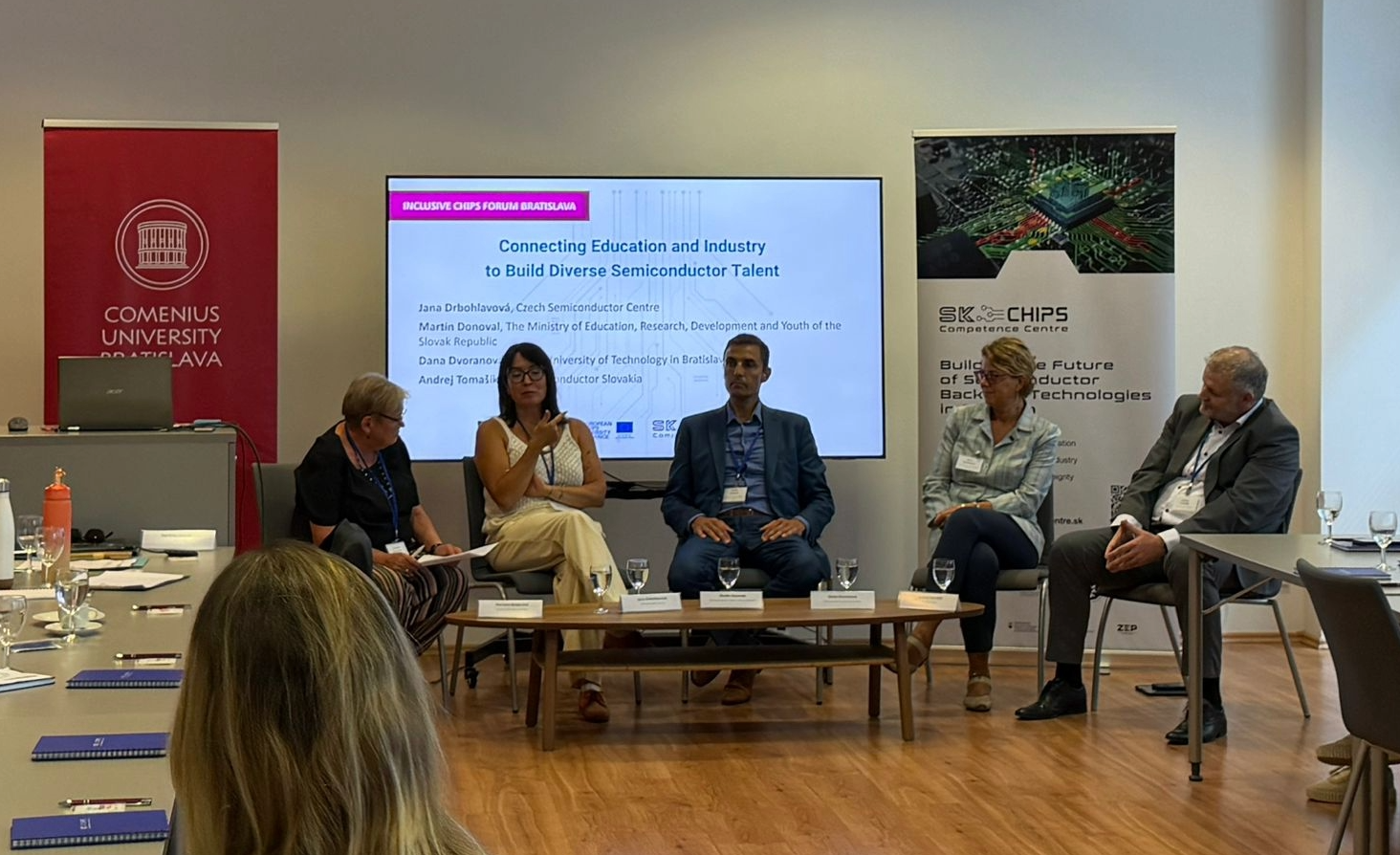
The forum concluded with a panel discussion, Connecting Education and Industry to Build Diverse Semiconductor Talent, bringing together Jana Drbohlavová from the Czech Semiconductor Centre, Dana Dvoranová from STU Bratislava’s Equal Opportunities Working Group, Andrej Tomášik, General Manager of onsemi Slovakia, and Martin Donoval, Slovakia’s National Delegate to the Chips Joint Undertaking. The panel explored what is working, where the gaps remain, and how education and industry can collaborate more effectively to build genuinely diverse and inclusive pathways into the sector. A networking coffee followed, giving participants the opportunity to continue conversations and build connections across academia, industry, and policy.
DEI Training for Educators and Industry: Building Capacity for Inclusive Talent Development
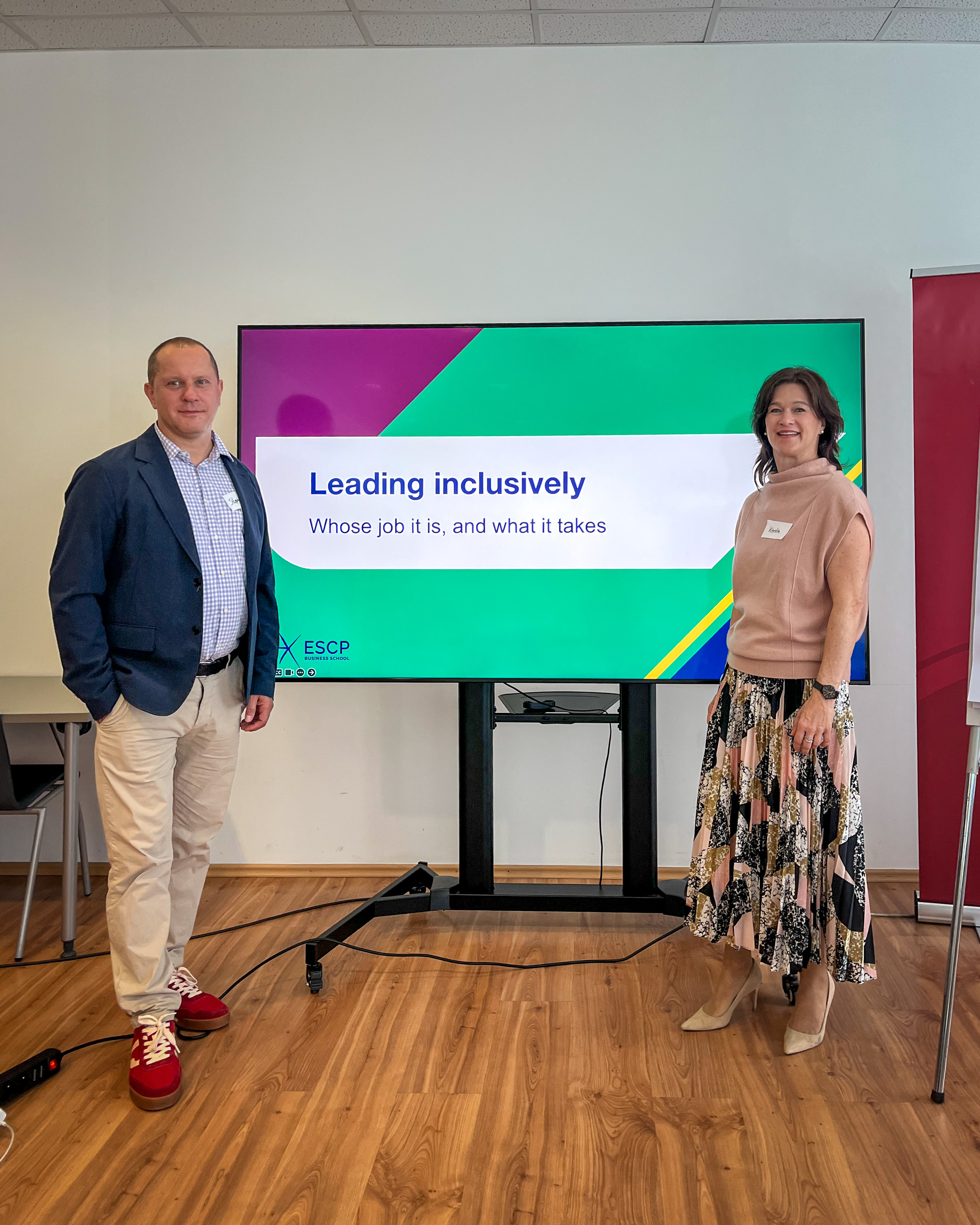
Two days later, on September 4, ECDA hosted a full-day DEI training at the same venue, designed for educators, education managers, and HR professionals working across higher education, vocational training, and industry. The training aimed to strengthen participants’ capacity to attract, develop, and retain diverse talent in STEM and semiconductor-related fields.
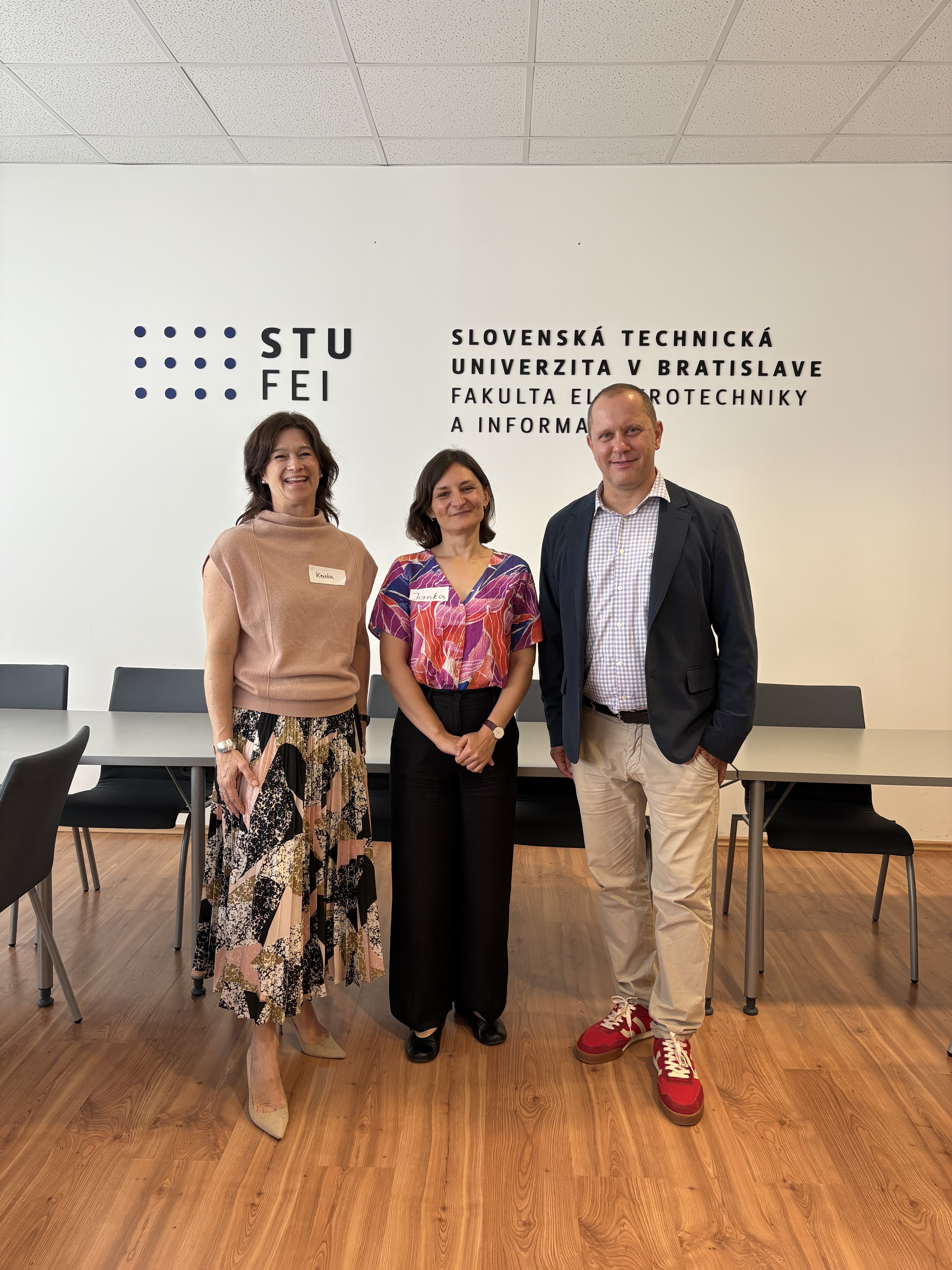
Led by Kerstin Alfes, Professor of Organisation and Human Resource Management at ESCP Business School, and Stephan Schmuck, lecturer at ESCP Business School and developer of Europe’s first LGBT+ leadership programme, the session combined theory with practice. It covered gender and neurodiversity, inclusive leadership, psychological safety, and cross-sector collaboration through interactive exercises, self-reflection, and real-world case studies.
The training was co-organised by the Slovak University of Technology in Bratislava, ESCP Business School, and Comenius University in Bratislava.

Looking Ahead
The Bratislava forum and training mark another important step in ECDA’s mission to build a more diverse, inclusive, and future-ready semiconductor industry across Europe. Information on the next Inclusive Chips Forum will be announced shortly.

 Co-funded by